
Search engine optimization (SEO) helps businesses improve their visibility in search engine results and connect with people actively looking for their products or services. However, achieving meaningful results requires more than adding keywords to website pages. Businesses also need useful content, a technically sound website, a clear site structure, and a positive user experience.
Many websites struggle to attract organic traffic because their content does not match search intent, their pages load slowly, or search engines have difficulty discovering and understanding their content. Without a clear strategy, businesses may invest time in SEO activities that fail to support their wider marketing goals.
A well-planned SEO strategy combines technical improvements, relevant content, keyword research, and ongoing performance analysis to help businesses build a stronger organic search presence.
SEO Strategy
SEO involves optimizing a website so search engines can discover, understand, and present its pages for relevant searches. An effective strategy begins with understanding the target audience, researching the terms they use, and identifying the information they expect to find.
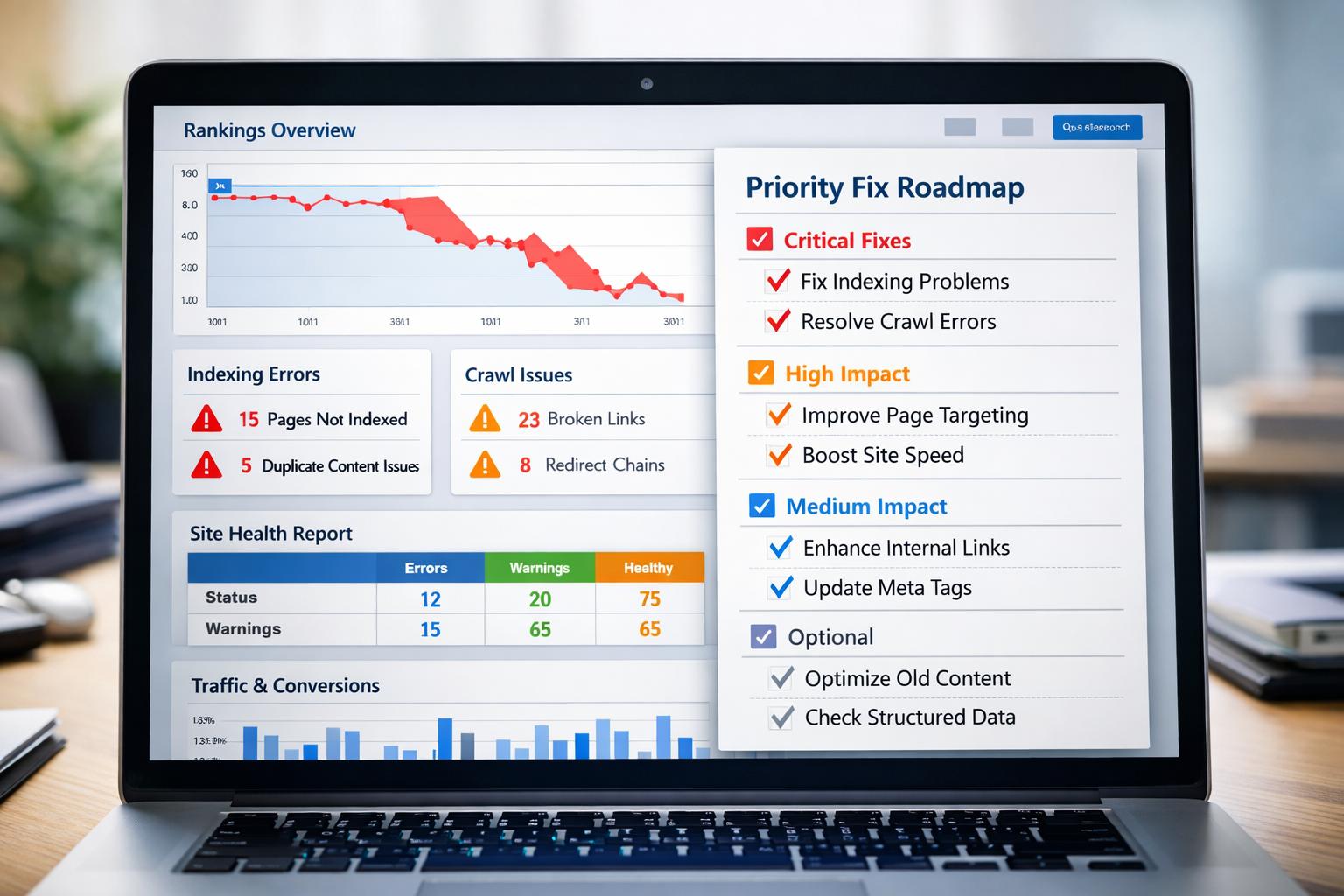
On-page SEO focuses on elements such as page titles, headings, internal links, meta descriptions, and content relevance. Technical SEO addresses areas including website crawlability, indexing, mobile usability, page performance, and site structure.
High-quality content is equally important. Pages should answer genuine user questions, provide useful information, and demonstrate relevant expertise rather than simply repeating keywords. A well-organized website also helps visitors navigate between related pages and discover the information they need.
SEO is an ongoing process. Search trends, competitors, website content, and search engine systems change over time, making regular reviews and improvements essential.
Turning Organic Visibility into Business Results
Improving search visibility is valuable, but businesses also need to understand whether their SEO efforts attract the right visitors and contribute to meaningful outcomes.
Metrics such as organic clicks, impressions, keyword performance, engagement, qualified leads, and conversions can help evaluate progress. Tools such as Google Search Console and website analytics platforms can provide insights into how users discover and interact with a website.
“SEO is more than keywords and rankings. Useful content, technical performance, and a better user experience help businesses improve search visibility and connect with the right audience.”
For example, a local service business can improve its service pages with relevant information, clear headings, location details, and useful answers to customer questions. By monitoring search performance and improving pages based on user needs, the business can work toward attracting more relevant organic visitors.
Rather than focusing only on rankings, businesses should align SEO activities with their audience’s needs and commercial objectives. With relevant content, a technically healthy website, and consistent performance monitoring, SEO can support long-term online visibility and sustainable business growth.