
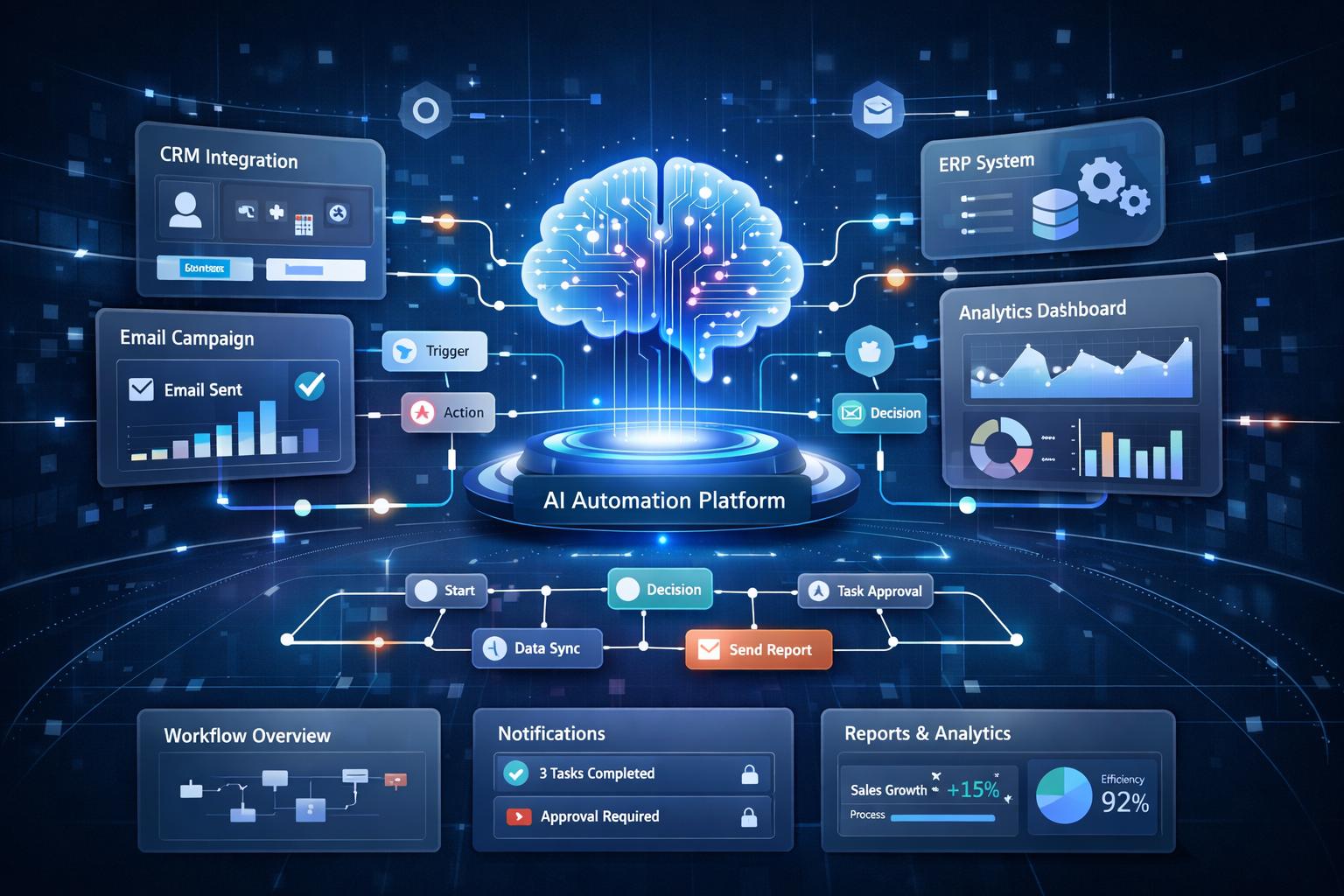
As organizations grow, managing repetitive processes across departments can become increasingly complex. Manual workflows, disconnected systems, and time-consuming administrative tasks can limit productivity and make it difficult for teams to focus on higher-value work. Intelligent automation offers a way to address these challenges by combining automation technologies with data-driven decision-making.
For financial technology companies such as Paysafe, operational efficiency is particularly important. Businesses operating in digital payments must coordinate processes, maintain reliable systems, and respond to changing operational requirements while keeping security and compliance in mind.
Intelligent automation can help organizations streamline routine activities, reduce manual effort, and improve consistency across business functions. When implemented strategically, it can support enterprise-wide efficiency while allowing employees to concentrate on tasks that require human judgment and expertise.

How Intelligent Automation Improves Enterprise Operations
Intelligent automation brings together technologies such as robotic process automation (RPA), artificial intelligence (AI), machine learning, and workflow orchestration. These technologies can automate repetitive tasks, process information, identify patterns, and connect workflows across different systems.
Unlike basic automation, which follows predefined rules, intelligent automation can also support activities that involve document processing, data classification, and decision support. Human oversight remains important for sensitive decisions, exceptions, and processes that require contextual understanding.
For a large organization, automation opportunities may exist across finance, customer operations, compliance support, reporting, and internal administration. Automating suitable tasks can reduce repetitive work, improve processing consistency, and help teams manage workloads more effectively.
Successful implementation begins with identifying processes that consume significant time or resources. Organizations can then assess technical dependencies, data quality, security requirements, and potential business impact before selecting an appropriate automation solution.
Building Enterprise-Wide Efficiency Through Automation
Enterprise-wide automation requires more than introducing individual tools. Businesses need a coordinated strategy that aligns automation initiatives with operational priorities, technology infrastructure, governance, and measurable outcomes.
A structured approach typically includes mapping existing workflows, identifying bottlenecks, prioritizing high-value opportunities, and integrating automation with existing business systems. Monitoring performance after implementation helps organizations understand whether the changes are delivering the intended benefits.
Intelligent automation is most effective when it supports a broader operational strategy rather than operating as a collection of isolated projects. By combining appropriate technology, process redesign, and responsible governance, organizations can build more efficient workflows and create capacity for innovation.
Paysafe provides a relevant context for exploring how intelligent automation fits into the wider fintech landscape. However, specific claims about Paysafe’s internal automation initiatives or measured results should be supported by verified company sources before publication.
“Intelligent automation can help enterprises streamline repetitive workflows, improve operational consistency, and free teams to focus on higher-value work. The key is combining the right technology with strong governance and measurable business goals.”
For example, a payments company could explore automating selected internal reporting tasks by collecting data from approved systems, validating required fields, and preparing standardized reports for employee review. This illustrative scenario could reduce manual preparation effort while improving consistency. The actual results would depend on the process design, data quality, integration requirements, and level of human oversight.
Organizations should also establish clear controls for access permissions, sensitive data, exception handling, and audit trails. These safeguards are especially important in financial services, where reliability and regulatory obligations are central to operations.
Over time, automation performance can be evaluated using indicators such as processing time, error rates, manual intervention, operating costs, and employee capacity. These measurements help teams refine workflows and identify additional opportunities for improvement.